
 English
 Česky
Česky
 Slovensky
Poetry that wouldn't be published without you
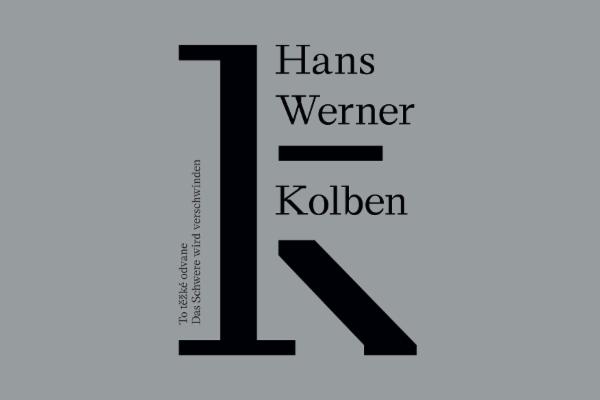
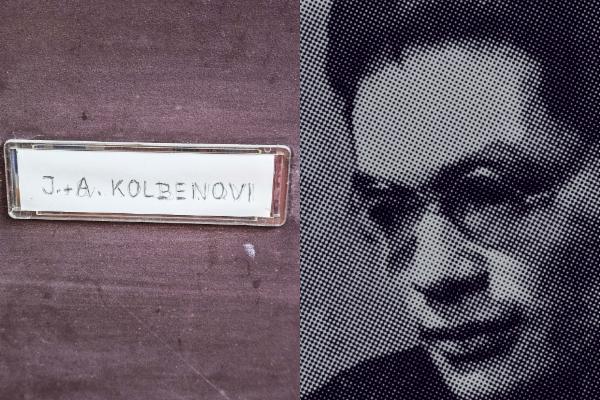
Originally German poems of Hans Werner Kolben, inventor´s Emil Kolben grandson, have never been published in Czech. Collection contains verses from occupied Prague and author's stay in Terezín. Let´s place the author in context of the Czech literature.
Author: Petr Dvořák



Choose reward for your contribution
-
sold 19Good FeelingI would like to support this project without claiming any reward.
Reward delivery: in a month after the Hithit project end
EUR 4.10(CZK 100) -
sold 0H.W. Kolben Reproduction Photo – BookmarkWe will send you, A6-format reproduction of the poet’s photograph with the unique number from this serie, which can serve as a bookmark. Shipping within Czech Republic is included in the price.
Reward delivery: on address, in a month after the Hithit project end
EUR 7.38(CZK 180) -
sold 32H.W. Kolben – Purchase of the BookWith this contribution, you are pre-ordering one copy of the poetry collection The Heaviness Will Fade Away ( To těžké odvane). The book will be sent to your address. Shipping within Czech Republic is included in the price.
Reward delivery: on address, in a month after the Hithit project end
EUR 11.89(CZK 290) -
sold 15H.W. Kolben – Purchase of the Book + Reproduction PhotoWith this contribution, you are pre-ordering one copy of the poetry collection The Heaviness Will Fade Away and A6 reproduction of the poet’s photograph with the unique number from this serie. The book can be handed over in person in Prague (by prior arrangement) or sent to your address. Shipping within Czech Republic is included in the price.
Reward delivery: on address, in a month after the Hithit project end
EUR 16.39(CZK 400) -
sold 21H.W. Kolben – Personal Handover & Villa VisitThe publisher will be delighted to hand over your pre-ordered copy of The Heaviness Will Fade Away in person. On this occasion, the publisher and members of the Kolbenova vila z.s. association will welcome you to the Kolben family villa. You will be introduced to the archives, featuring information and photographs from the life and work of Emil Kolben and his descendants. The date of the meeting at the Emil Kolben Villa will be announced in advance.
Reward delivery: in a month after the Hithit project end
EUR 30.74(CZK 750) -
sold 11H.W. Kolben – Book Handover in the Villa + Pre-order of the Next CollectionThe publisher will be delighted to hand over your pre-ordered copy of The Heaviness Will Fade Away in person at the Kolben family villa, alongside a tour of the family archives.
Additionally, with this contribution, you are pre-ordering our upcoming collection: a selection of translated poetry from the indigenous peoples of Africa, the Americas, and Asia, including an invitation to the public launch of this collection next year.Reward delivery: in a month after the Hithit project end
EUR 51.23(CZK 1,250)
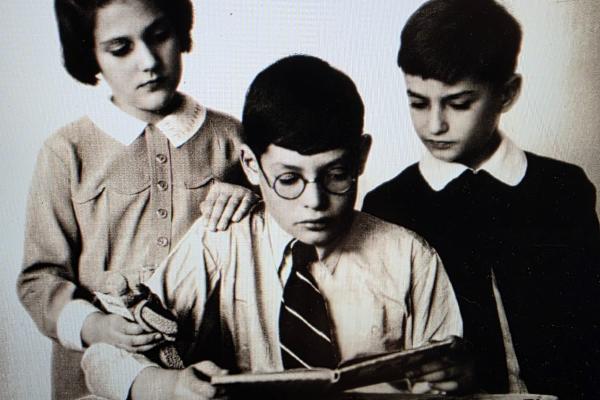
I love poetry and I decided to publish those verses whoch have not had chance to be published in the Czech Republic up to now. Within the authors who did not live to see us, I decided as the first one pick and publish the work of an author whose family lived in Hradešínská Street until 1943. We walk around Kolben's villa every day and the idea of completing the picture of family life in the villa with fragments of young poet´s life and work is an extraordinary motivation for publishing the collection.
Details
This is a bilingual edition of verses by Hans Werner Kolben. Helena Zábranská translated the poems from German. She translated the edition of the collection, which was originally published under the title Das Schwere wird verschwinden in 2011 in Wuppertal. The author, the grandson of the inventor and industrialist Emil Kolben, was arrested by the Gestapo in 1942 because someone on the street reported him for not wearing the mandatory Jewish identification, i.e. the Jewish six-pointed star. Kolben died in a concentration camp in 1945. Hans Werner Kolben's verses are characterized by a precise sense of regular rhythm and connected verses. Kolben is deeply emotional in his verses, he wrote poems characterized by a high degree of feeling. In the verses we feel sadness, the oppressive atmosphere of the occupation and the darkness, anxiety, uncertainty and fears during his imprisonment in the Terezín. The publisher sees the importance of publishing Kolben's verses in fact that the verses have not become outdated thanks to the author's sensitivity, imagination and sense of creating abstract images. The poet claimed to be part of the legacy of the most important lyric poets and, according to eyewitnesses, recited Rilke's and Goethe's verses even while doing inhumane work in the concentration camp.
Curiosities
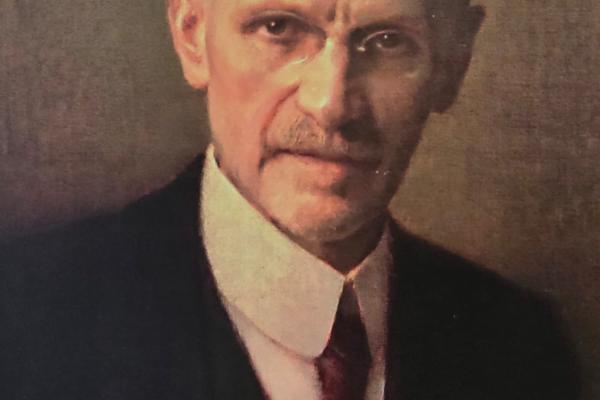
The poet was the grandson of the industrialist Emil Kolben. While in the USA, he became an electrical engineer and designer, working with Thomas Alva Edison and later Nikola Tesla. After returning to the Czech lands, he continued to develop projects in the field of electrical engineering. Emil Kolben's activity culminated in 1927, when he became a partner and co-founder of the company ČKD, abbreviated as Českomoravská-Kolben-Daněk.
Who am I?
I am a sociologist by profession, and since 1989 I have been professionally involved in my second passion after poetry - radio broadcasting. First as a moderator and music programmer for the program Mikrofórum, after the Velvet revolution in the private sector as a program director and later as a co-founder of the Prague radio stations City 937, Oldies 103.7 and Rádio Blaník.
Why we do it
I feel the need, almost the obligation, to return the name and work of Hans Werner to the literature of the country where he was born and worked in. His work, which is not large in scope, is, among other things, a document and testimony to Prague German, which retained its classical conservative form because it had the character of a language island in the middle of the Czech language environment. Thanks to our book, anyone interested can, for example, read both the poet's German in its original version and the excellent translation into Czech by Helena Zábranská.
Choose reward for your contribution
-
sold 19Good FeelingI would like to support this project without claiming any reward.
Reward delivery: in a month after the Hithit project end
EUR 4.10(CZK 100) -
sold 0H.W. Kolben Reproduction Photo – BookmarkWe will send you, A6-format reproduction of the poet’s photograph with the unique number from this serie, which can serve as a bookmark. Shipping within Czech Republic is included in the price.
Reward delivery: on address, in a month after the Hithit project end
EUR 7.38(CZK 180) -
sold 32H.W. Kolben – Purchase of the BookWith this contribution, you are pre-ordering one copy of the poetry collection The Heaviness Will Fade Away ( To těžké odvane). The book will be sent to your address. Shipping within Czech Republic is included in the price.
Reward delivery: on address, in a month after the Hithit project end
EUR 11.89(CZK 290) -
sold 15H.W. Kolben – Purchase of the Book + Reproduction PhotoWith this contribution, you are pre-ordering one copy of the poetry collection The Heaviness Will Fade Away and A6 reproduction of the poet’s photograph with the unique number from this serie. The book can be handed over in person in Prague (by prior arrangement) or sent to your address. Shipping within Czech Republic is included in the price.
Reward delivery: on address, in a month after the Hithit project end
EUR 16.39(CZK 400) -
sold 21H.W. Kolben – Personal Handover & Villa VisitThe publisher will be delighted to hand over your pre-ordered copy of The Heaviness Will Fade Away in person. On this occasion, the publisher and members of the Kolbenova vila z.s. association will welcome you to the Kolben family villa. You will be introduced to the archives, featuring information and photographs from the life and work of Emil Kolben and his descendants. The date of the meeting at the Emil Kolben Villa will be announced in advance.
Reward delivery: in a month after the Hithit project end
EUR 30.74(CZK 750) -
sold 11H.W. Kolben – Book Handover in the Villa + Pre-order of the Next CollectionThe publisher will be delighted to hand over your pre-ordered copy of The Heaviness Will Fade Away in person at the Kolben family villa, alongside a tour of the family archives.
Additionally, with this contribution, you are pre-ordering our upcoming collection: a selection of translated poetry from the indigenous peoples of Africa, the Americas, and Asia, including an invitation to the public launch of this collection next year.Reward delivery: in a month after the Hithit project end
EUR 51.23(CZK 1,250)
Comments